Discover the Grand Theater of Ephesus and Top Destinations in Ephesus with an expert tour guide and a TripAdvisor Winner for 12 consecutive years.
The Grand Theater of Ephesus
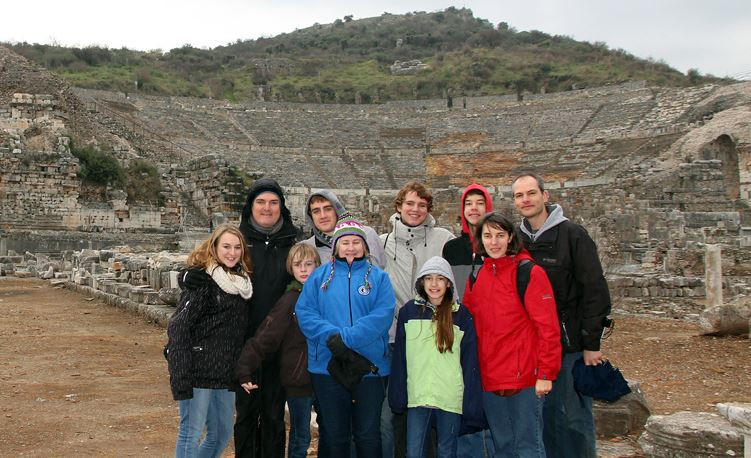
Ephesus Theater
Ephesus Theater was constructed in the Hellenistic period but remodelled many times in the Roman period. The main diffrence between a Hellenistic Theater and a Roman Theater is that the Hellenistic ones are leaning on a hill. It is the Romans who invented free standing huge walls. It took 60 years to complete. Theater of Ephesus is the largest theater in the Asia Minor with accommodation for 25.000 people; 24.000 seats and 1000 standing places. It was originally two-storied and was heightened by one storey at a later date. Served not only for dramatic performances, but also for demonstations of a social, political, economic, religious nature and for gladiator games.
Theater name is derived from the Greek word "Theatron" which means" the place to observe". The half circle shaped section was called "orchestra". Performances were held on the stage building called "Skene". Skenes were 2 storeys in Hellenistic period and 3 storeys during Roman peroid. The reason having them 3 storey building is to let the spectators focus to the plays. Sitting section is called cavea. The round access sections are called 'Diazoma".All performances were during the day. Usually there was an admission for entrance. Tickets small coins showing where the spectators will seat. Mid. 1st century some gladiator games were performed in this theater. This theater is also mentioned in the New Testament Acts Chapter 19. A riot started against Paul in 56 AD. The riot started by a silversmith by the name of Demetrius provoked his fellow-craftsmen to a public out cry against Paul, with the cry "Great is Artemis of Ephesians". He did it because he thought this new religion could ruin their businesses. They made their living by selling statues of Artemis to pilgrims visiting there from far and wide. A major riot started against Paul. Paul tried to enter the theater but his companions did not let him do. He was sacked from the city of Ephesus. Few months later he was in the city of Miletus and asked the elders of Ephesus to join him there after making a farewell speech. He went back to Jerrussalem where he got arrested. He claimed to be judged by the Roman Emperor since he was a Roman citizen. On the way to Rome his ship was wrecked in Malta. Before he got executed in Rome he wrote the letter to Ephesians and the 2 letters to Timothy who was one of the companions of Paul in Ephesus. Still concerts take place in the Theater of Ephesus. In the modern era Elton John, Mikis Theodorakis, John Baes, Ray Charles, Sting, Diana Ross and many more made concerts in Ephesus.
|
Theater of Ephesus
|
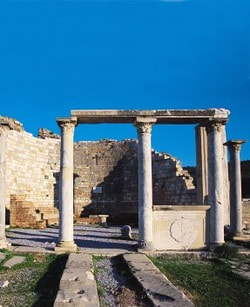
Church of Mary
|
It is the first church named after Virgin Mary which was ordered by Emperor Constantin. Before it was converted to a church, the building was used to stock wheat. The third ecumenical council in 431AD was held here. The councils aim was to put an end to the controversies concerning the divinity of Christ and the sanctity of the Holy Virgin. Council ruled that God was one being, though two natures the Father and the Son, and that the Virgin Mary was truly the mother of Christ (Theotokos - god bearer). In the 7th century church fell into ruin. Byzantines raised a new church on very same site, For this reason the basilica has been named as "The Double Church"
In the early times of Christianity, churches were dedicated to the people who lived and died in the same province. Since this was the first church dedicated to Virgin Mary. It makes people think in regards of the possibilities of Virgin Mary living in Ephesus. An inscription dating back to third ecumenical council was also found saying thet "we are writing from the house where our mother Mary lived and died. |
Ephesus Travel Guide by TransBalkan Tours is a fully licenced tour operator and a member of TURSAB. License: A 776.
